The CIO’s Guide to Building a Security-Led IT Operating Model
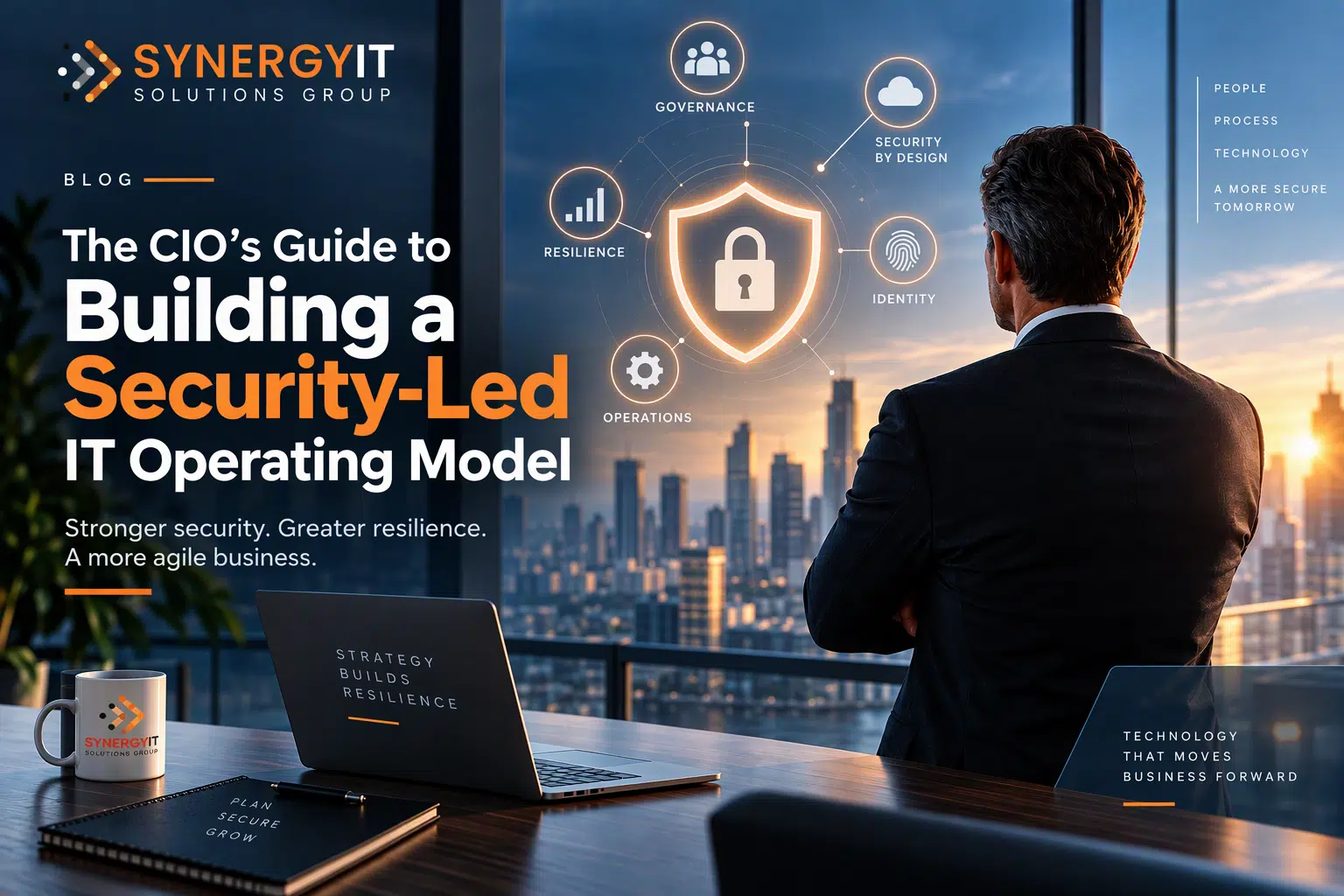
Security Is No Longer a Department. It Is an Operating Principle.
Many organizations have invested significantly in cybersecurity over the past decade. They have deployed endpoint security tools, cloud security platforms, identity controls, threat detection solutions, and compliance programs. Yet despite increased spending, security incidents, operational disruptions, and governance challenges continue to grow.
The root cause is often not a lack of security technology.
It is a disconnect between cybersecurity and the way the IT organization operates.
In many enterprises, security remains a separate function responsible for enforcing policies and responding to incidents. Meanwhile, infrastructure, cloud, application, networking, and business technology teams continue making critical decisions independently. The result is inconsistent governance, fragmented risk management, and security controls that are applied too late in the process.
Forward-looking CIOs are addressing this challenge by adopting a security-led IT operating model.
In a security-led operating model, cybersecurity is embedded into governance, architecture, service delivery, technology planning, vendor management, digital transformation initiatives, and operational decision-making. Security becomes part of how the organization functions rather than another layer added afterward.
This guide explains what a security-led IT operating model is, why it matters, and how CIOs can build one to improve cyber resilience, operational efficiency, and business outcomes.
Why Traditional IT Operating Models No Longer Meet Modern Security Demands
For years, organizations structured IT around functional silos:
- Infrastructure teams managed servers and networks
- Security teams managed threats and compliance
- Application teams focused on development
- Operations teams maintained service delivery
- Business units drove digital transformation initiatives
This model worked when technology environments were more centralized and predictable.
Today’s environments are significantly more complex.
Organizations now operate across:
- Hybrid cloud environments
- Remote and distributed workforces
- SaaS ecosystems
- Third-party integrations
- AI-enabled applications
- Multi-cloud infrastructures
- Internet-connected devices
Every business initiative increasingly depends on technology.
Consequently, every technology decision also becomes a security decision.
A cloud migration affects data protection requirements. A new SaaS platform impacts identity governance. AI adoption introduces new risks around data exposure and compliance. Vendor relationships create supply-chain security concerns.
When security remains isolated from these decisions, organizations become reactive rather than proactive.
Modernizing the operating model
If security, cloud, infrastructure, and business teams are making technology decisions independently, the first priority is to establish a shared transformation roadmap. Explore how a structured digital transformation strategy can align technology modernization with security, governance, and operational requirements.
What Is a Security-Led IT Operating Model?
A security-led IT operating model is a governance and operational framework that integrates cybersecurity considerations into every stage of technology planning, delivery, and management.
Rather than asking:
“How do we secure this after implementation?”
Organizations begin by asking:
“How do we design, govern, and operate this securely from the beginning?”
Security becomes a core decision-making principle that influences:
- Strategic planning
- Technology procurement
- Application development
- Cloud adoption
- Vendor selection
- Workforce enablement
- Change management
- Service delivery
- Business continuity planning
The model aligns security objectives with business goals, enabling organizations to reduce risk without slowing innovation.
Evaluate the operating model, not only individual controls
A security-led operating model depends on coordinated governance, technology architecture, ownership, and risk management. If your organization is reviewing these capabilities, a cybersecurity audit can help identify gaps and establish practical priorities.
The Business Benefits of Embedding Security into IT Operations
Improved Cyber Resilience
A security-led organization is better prepared to prevent, detect, respond to, and recover from cyber incidents.
Rather than relying solely on perimeter defenses, organizations establish multiple layers of visibility, protection, and accountability across their technology ecosystem.
This approach aligns closely with frameworks such as the NIST Cybersecurity Framework (CSF), Zero Trust Architecture, and CIS Controls.
Cyber resilience depends on more than prevention. Organizations also need continuous visibility, qualified investigation, defined escalation paths, and tested response procedures. Learn how SOC as a Service can support continuous monitoring and coordinated incident response.
Better Business Alignment
When security discussions occur at the same level as business planning, leaders can make informed trade-offs between risk, cost, and innovation.
Security becomes a business enabler rather than a perceived obstacle.
Reduced Operational Risk
Organizations gain greater consistency in:
- Change management
- Identity governance
- Third-party risk management
- Cloud security policies
- Incident response procedures
This reduces the likelihood of operational disruptions caused by human error, configuration weaknesses, or unmanaged technology adoption.
Policies create value only when they are consistently applied across identities, cloud environments, data, vendors, and operational workflows. Consider an independent review to identify where control gaps or inconsistent processes may be increasing business exposure.
Improved Regulatory Readiness
Many organizations must demonstrate security and governance maturity through frameworks such as:
- ISO 27001
- SOC 2
- PCI DSS
- HIPAA
- NIST CSF
A security-led operating model helps establish repeatable processes that support compliance and audit requirements while improving overall risk management.
Regulatory readiness is easier to maintain when control ownership, access reviews, monitoring records, and recovery tests are part of normal operations. Organizations reviewing their governance maturity can use a cybersecurity audit to identify documentation and control gaps before an external assessment.
Stronger Executive Visibility
A mature operating model provides leadership teams with measurable insights into:
- Security posture
- Operational risk
- Technology performance
- Business resilience
- Incident trends
This visibility supports more informed strategic decision-making.
Five Core Pillars of a Security-Led IT Operating Model
1. Governance and Executive Accountability
Security begins with leadership.
High-performing organizations establish clear accountability for cyber risk at executive and board levels.
Key governance components include:
- Security steering committees
- Executive risk reviews
- Defined ownership responsibilities
- Security reporting metrics
- Board-level risk communication
The CIO plays a critical role in ensuring technology strategy and security strategy remain aligned.
Security responsibility should not belong exclusively to the CISO or security team.
Every technology leader must participate in managing enterprise risk.
Begin by defining who owns each material risk, which decisions require executive review, and which metrics leadership will monitor. A cybersecurity audit can provide a structured baseline for that governance discussion.
2. Security-by-Design Architecture
Security should be integrated into architectural decisions from the beginning.
This principle requires organizations to evaluate security implications before deploying new technologies, applications, or business services.
Important considerations include:
- Data classification
- Access controls
- Network segmentation
- Cloud security architecture
- Encryption requirements
- Vendor risk assessments
Security-by-design reduces costly remediation efforts and creates stronger long-term resilience.
If your organization is planning cloud migration, application modernization, or a new digital platform, include security requirements during architecture and procurement reviews. Explore how digital transformation services can align modernization decisions with governance and resilience requirements.
3. Identity-Centric Security
Modern cybersecurity revolves around identity.
With users accessing resources from multiple locations, devices, and cloud platforms, traditional network perimeters have become less relevant.
Organizations should prioritize:
- Identity and Access Management (IAM)
- Privileged Access Management (PAM)
- Multi-Factor Authentication (MFA)
- Conditional access policies
- Identity monitoring
- Zero Trust access models
Identity-centric security helps ensure that the right individuals receive the appropriate level of access while reducing the risk of unauthorized activity.
Review privileged access, authentication coverage, conditional-access policies, inactive accounts, and access-certification processes. SynergyIT’s identity and access management services can support a structured assessment of identity-related risks and control gaps.
4. Continuous Monitoring and Threat Detection
Organizations require ongoing visibility into security events and operational risks.
This typically involves:
- Security Information and Event Management (SIEM)
- Security Orchestration, Automation and Response (SOAR)
- Endpoint Detection and Response (EDR)
- Extended Detection and Response (XDR)
- Managed Detection and Response (MDR)
- Security analytics platforms
The objective is not merely collection of alerts.
The goal is rapid detection, prioritization, and response to threats before significant business impact occurs.
If critical alerts are delayed, duplicated, or left without clear ownership, review how security data moves from detection to investigation and containment. Learn how SOC as a Service can extend monitoring and response capabilities.
5. Operational Resilience and Recovery
No organization can eliminate all cyber risk.
A security-led operating model recognizes that resilience is just as important as prevention.
Organizations should establish:
- Incident response plans
- Disaster recovery strategies
- Business continuity frameworks
- Crisis communication procedures
- Data backup validation processes
- Recovery testing programs
Effective resilience planning reduces downtime and strengthens organizational confidence during disruptive events.
Documented plans are important, but operational readiness depends on tested backups, assigned decision authority, communication procedures, and recovery exercises. Include these capabilities in the organization’s next security and resilience assessment.
How CIOs Can Transition from Reactive Security to Proactive Risk Management
Building a security-led operating model is a transformation journey rather than a single project.
Step 1: Assess Current-State Maturity
Evaluate:
- Governance structures
- Security controls
- Risk management processes
- Operational workflows
- Technology inventories
Frameworks such as NIST CSF 2.0 can provide valuable benchmarks.
Step 2: Align Security Objectives with Business Goals
Security investments should support organizational priorities such as:
- Revenue growth
- Customer trust
- Regulatory obligations
- Digital transformation
- Operational efficiency
When security initiatives directly support business outcomes, executive buy-in becomes significantly easier.
Step 3: Establish Shared Accountability
Create clear ownership for:
- Data protection
- Cloud security
- Identity management
- Vendor risk
- Business continuity
Security cannot operate effectively in isolation.
Step 4: Integrate Security into Technology Decisions
Require security participation in:
- Cloud migrations
- Application development
- Procurement reviews
- Infrastructure modernization
- AI adoption initiatives
Embedding security early reduces business risk and implementation costs.
Step 5: Measure and Continuously Improve
Track metrics such as:
- Mean Time to Detect (MTTD)
- Mean Time to Respond (MTTR)
- Vulnerability remediation timelines
- Identity governance maturity
- Recovery testing effectiveness
- Security awareness performance
Measurement creates accountability and drives continuous improvement.
Common Challenges During Transformation
Even well-planned initiatives face obstacles.
Common challenges include:
Organizational Silos: Departments may resist shared accountability or operational changes.
Legacy Technology: Outdated systems often lack modern security capabilities and integration options.
Limited Internal Expertise: Many organizations struggle to recruit and retain cybersecurity talent.
Tool Proliferation: Businesses frequently deploy multiple security products without a cohesive operating strategy.
Competing Priorities: Leaders must balance security improvements with growth initiatives, budget considerations, and operational requirements.
Successful transformation requires executive sponsorship, realistic expectations, and phased implementation.
Organizations do not need to replace every legacy platform or resolve every process issue at once. A staged roadmap can identify which governance, identity, monitoring, resilience, and architecture improvements should be addressed first.
How Synergy IT Supports Security-Led Operating Transformation
- Cybersecurity maturity and control assessments
- Governance and operational-gap analysis
- Security-focused technology roadmaps
- Identity and access management
- Data security and protection
- SOC as a Service
- Continuous security monitoring
- Digital transformation planning
Rather than focusing exclusively on individual security tools, the objective is to help organizations build a sustainable operating model capable of supporting growth, compliance, and long-term resilience.
Key Takeaways for CIOs
A security-led IT operating model is no longer optional for organizations navigating today’s threat landscape.
The most successful CIOs understand that cybersecurity is not simply a technical function. It is a business capability that influences operational resilience, customer trust, regulatory readiness, and strategic growth.
Organizations that embed security into governance, architecture, operations, and decision-making are positioned to:
- Reduce cyber risk
- Improve resilience
- Support digital transformation
- Strengthen compliance readiness
- Increase executive visibility
- Enable sustainable innovation
The goal is not to create more security processes.
The goal is to build an operating model where security becomes part of how the organization works every day.
FAQs
What is a security-led IT operating model?
A security-led IT operating model is an organizational framework that integrates cybersecurity into technology governance, operations, planning, and decision-making processes rather than treating security as a separate function.
Why do CIOs need a security-led operating model?
It helps CIOs align cybersecurity with business objectives, improve risk management, support compliance requirements, and increase organizational resilience against evolving threats.
How does a security-led IT operating model improve cyber resilience?
It embeds security controls, governance, monitoring, and recovery planning throughout technology operations, enabling faster detection, response, and recovery from cyber incidents.
What frameworks support a security-led operating model?
Common frameworks include NIST Cybersecurity Framework (CSF), NIST CSF 2.0, Zero Trust Architecture, CIS Controls, ISO 27001, SOC 2, and PCI DSS.
How long does it take to implement a security-led IT operating model?
Timeframes vary depending on organizational maturity, technology complexity, and resources. Most organizations implement foundational improvements over 6 to 18 months, while broader transformation initiatives can take longer.
Can small and mid-sized businesses benefit from a security-led operating model?
Yes. While implementation may be scaled differently, organizations of all sizes benefit from integrating security into governance, identity management, operational processes, and strategic planning.
Conclusion
Cyber threats, regulatory expectations, cloud adoption, and digital transformation initiatives are reshaping how modern IT organizations operate.
The question is no longer whether security should influence technology decisions.
The question is whether security is embedded deeply enough into the operating model to support the organization’s long-term objectives.
For CIOs, the path forward is clear: move beyond isolated cybersecurity programs and build an operating model where governance, architecture, operations, and resilience are guided by security principles from the start.
Organizations that make this transition will be better positioned to manage risk, accelerate innovation, and create lasting business value.
Request a Security Strategy Assessment
If your organization is evaluating its cybersecurity governance, operational resilience, cloud security strategy, or IT operating model, SynergyIT can help identify capability gaps, prioritize risks, and develop a practical roadmap aligned with your business objectives.


Leave A Comment